

How To Winterize A Inboard Boat
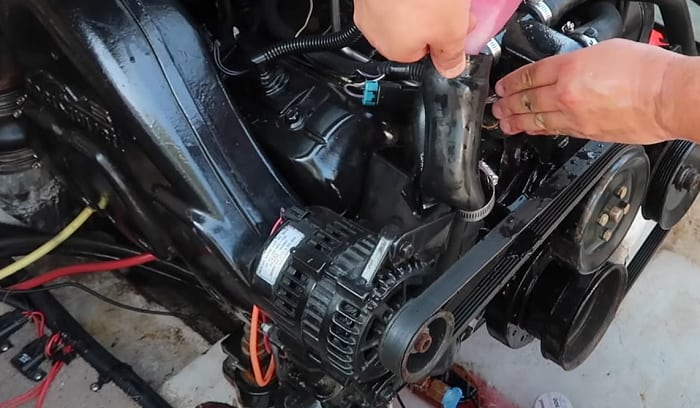
Are y'all set to store your inboard watercraft this wintertime? Learning how to winterize an inboard boat will assist you keep your vessel in tip-acme shape while yous stay cozy and warm in your habitation during the common cold months.
Winterizing inboard boats is an essential task all watercraft owners must know. Information technology prevents gunk buildup and keeps condensation away from your vessel's fuel tank. Prepping your boat for the winter also keeps the engine's optimal operating functionality.
And then, how exercise you prep your inboard watercraft for the winter? Read on for info on calculation fuel stabilizer, using antifreeze, changing the oil filter, and more.
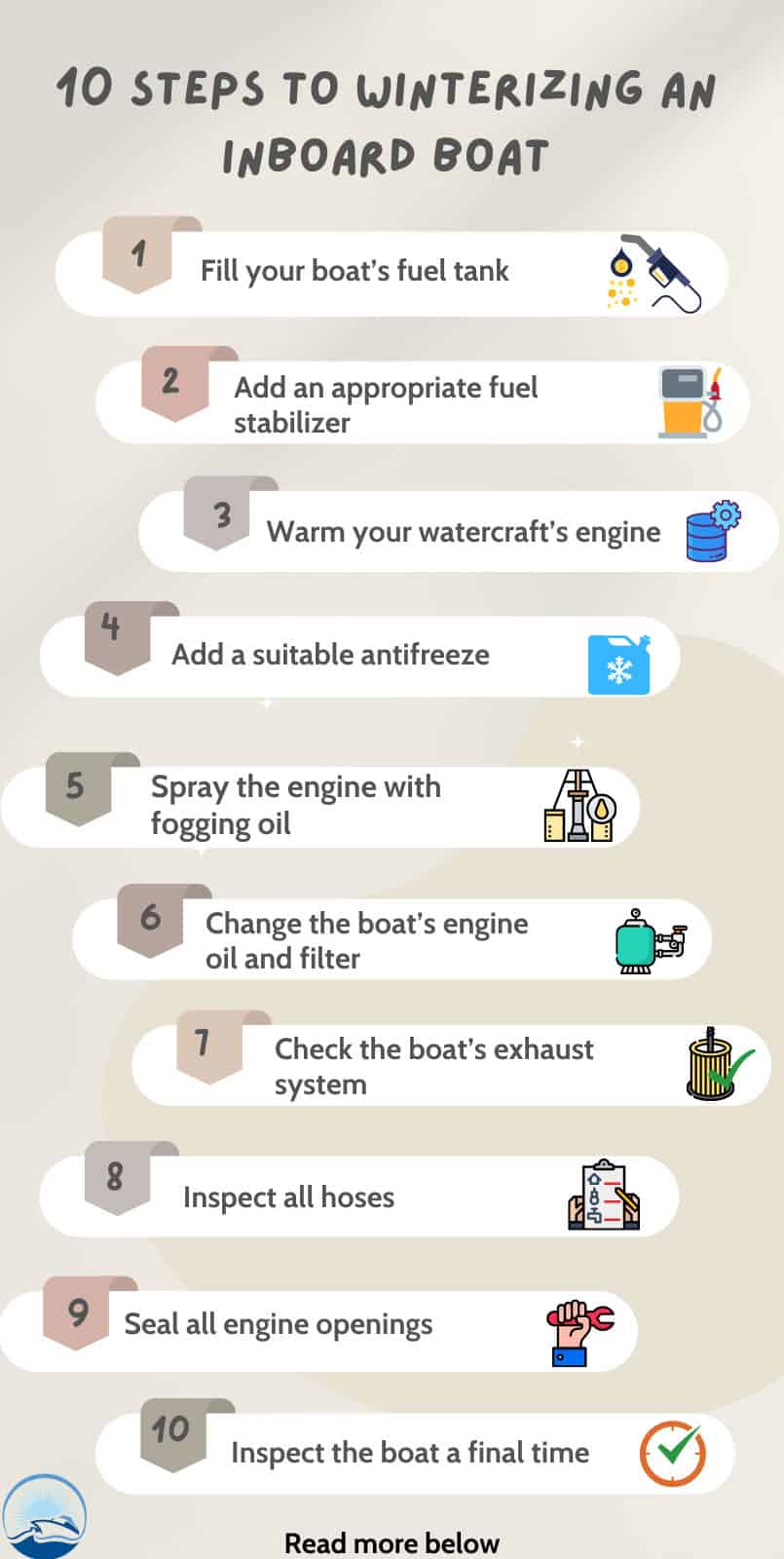
Table of Contents
- Things Yous Will Need for This Tutorial
- ane. Owner's Manual
- 2. Antifreeze
- 3. Fogging Oil
- 4. Fuel Stabilizer
- 5. Other Tools and Materials
- Steps to Winterizing an Inboard Gunkhole
- Step 1. Fill up your boat's fuel tank.
- Step ii. Add an appropriate fuel stabilizer.
- Step 3. Warm your watercraft'due south engine.
- Step four. Add a suitable antifreeze.
- Step 5. Spray the engine with fogging oil.
- Step 6. Alter the gunkhole's engine oil and filter.
- Pace 7. Check the gunkhole's frazzle system.
- Stride viii. Inspect all hoses.
- Step nine. Seal all engine openings.
- Step ten. Inspect the gunkhole a concluding time.
- Conclusion
Things You Will Need for This Tutorial

Winterizing your inboard gunkhole requires a few things.
1. Owner's Manual
This essential certificate tells y'all everything about your inboard boat, including technical specifications for the engine, transmission, engine cooling organization, exhaust, and more. You will also observe the right procedures for winterizing your watercraft and the recommended products to apply.
ii. Antifreeze
Information technology would exist best to choice an antifreeze with propylene glycol instead of ethylene glycol considering it is less toxic. You will not want harmful chemicals to go into the h2o and kill aquatic life forms. Using propylene glycol to supervene upon your boat's engine coolant is too safer.
iii. Fogging Oil
This product protects your carburetor and engine cylinders against corrosion. It ensures your motor will run smoothly when you operate information technology later on winter. Yous can try the Star Brite Professional Grade Fogging Oil if y'all want.
4. Fuel Stabilizer
If your inboard boat's engine runs on ethanol gasoline, you might want to consider adding a fuel stabilizer. This additive is essential when storing any vehicle for half dozen months or longer. It prevents h2o from entering the fuel tank and keeps the fuel lines open and frost-free.
five. Other Tools and Materials
Y'all also need a boat cover, suitable engine and transmission oils, engine oil filter, and cleaning materials.
Steps to Winterizing an Inboard Boat
Step 1. Fill up your boat's fuel tank.
Before you winterize an inboard motor, it would be best to fill the fuel tank to prevent air from getting into the fuel organisation.
It volition be wise to remember that air contains wet, potentially leading to condensation in low temperatures. Failure to make full the fuel tank before winter sets in tin crusade engine problems considering there volition be water in the fuel system.
Stride 2. Add an advisable fuel stabilizer.
I recommend reading your gunkhole owner's transmission to check what fuel stabilizer you can add.
If in that location is no data available, I love the STAR BRITE EZ Store EZ Start Gasoline Stabilizer. This production will protect a fuel delivery organization, tank, and engine during the winter.
A fuel stabilizer is crucial for keeping the full functionality of carburetors, fuel injectors, and fuel lines by protecting them against freezing.
Footstep 3. Warm your watercraft's engine.
It would be all-time to warm your boat'southward engine while information technology is even so in the water. If not, check your watercraft to see if you lot tin fit an adaptor and connect it to a garden hose. This process will assistance remove any debris from the vessel's engine cooling organization.
Warming your engine also circulates the fuel and stabilizer, allowing them to work wonder in protecting fuel delivery system components.
Stride four. Add a suitable antifreeze.
I advise looking at your possessor's manual on how to add antifreeze to your boat'south engine cooling arrangement.
Drain the old coolant from your engine block before adding an antifreeze. Some people as well affluent their engine cooling organization to remove whatever trapped particulates.
Yous can add the antifreeze once done with the draining and flushing.
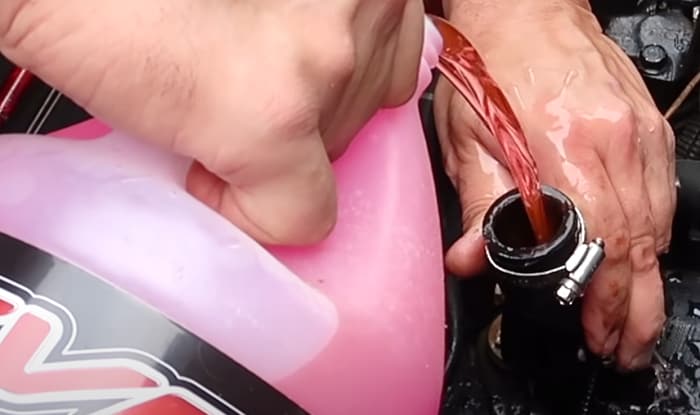
Cascade non-toxic antifreeze into a five-gallon bucket. Shut the intake seacock and reposition the raw water hose's tip into the antifreeze-filled bucket.
Allow your engine run at idle while y'all picket the system siphon the antifreeze from the bucket. Y'all can time the process for about xxx seconds or until the container is almost empty.
Pro Tip: Continue your engine running to help broadcast the antifreeze throughout the system.
Step 5. Spray the engine with fogging oil.
As the antifreeze saucepan becomes well-nigh empty, open the gunkhole's carburetor and spray the fogging oil. Information technology would be wise to remember that depression-horsepower motors can stall while high-horsepower engines can sputter. These things are typical.
Note white fume coming from the motor. Switch off the engine when in that location is no more antifreeze solution in the bucket.
Return the hose to its original position and secure it to the seacock.
Chris Boats has an exciting video about how to winterize a boat you might consider checking out.
Pro Tip: You can spray fogging oil straight into the combustion chamber by removing the spark plugs. There is no need to use the antifreeze bucket if you utilise this trick.
Step 6. Change the boat's engine oil and filter.
Changing the engine oil and filter is an essential step to winterize inboard boat motor. The lubricant may already comprise unwanted particles that can harm the motor if left to sit down throughout the winter.
Turn off your engine and locate the engine oil port. Open the port and insert a tube to siphon the quondam engine oil. You can also employ a manual pump to draw out the lubricant from the engine.
Remove the oil filter using an oil filter wrench and discard properly. Install a new oil filter and tighten it co-ordinate to the manufacturer's recommendations.
Fill your engine with new oil, keeping in mind your gunkhole'south recommended lubrication requirements.
Pro Tip: You lot might besides want to alter your boat's transmission oil to prepare it for winter. Yous can observe the same process, except that you volition perform them on the watercraft's transmission.
Footstep vii. Bank check the gunkhole's exhaust organisation.
Disconnect the exhaust from the manifold or water elevator muffler. Inspect the hose and the exhaust system for signs of corrosion or carbon buildup. It would be best to remove these surface contaminants before storing your gunkhole for the winter.
Audit the raw h2o injection hose for signs of scale or debris. You lot might want to remove these, too.
Step 8. Audit all hoses.
Cracks in hoses are excellent entry points for moisture in winter, leaving your boat vulnerable to impairment. E'er inspect all hoses for signs of brittleness, shredding, or cracking.
You might also want to check the hose clamps for corrosion or other forms of damage. Information technology would be wise to supercede these parts before you go into your winter quarters.
Step ix. Seal all engine openings.
Check your engine and expect for possible ingress points for dirt and moisture. Cover these openings – frazzle outlets, crankcase and transmission breathers, and air inlets – with plastic caps and secure them with tape.
You might want to list all the parts you covered to go far easy to remove come springtime.
Step x. Inspect the boat a final fourth dimension.
Disconnect your battery and keep it connected to a trickle charger in your garage. Put repellents and traps in your boat to ward off rodents and prevent pest infestations.
Lubricate all joints and grease points on the motor. Remove command cables, boat accessories, devices, and other valuables.
Information technology would be wise to cover your inboard boat with a good-quality gunkhole cover. You might also want to use a dehumidifier to keep moisture out.
Conclusion
Knowing how to winterize an inboard boat is essential for keeping its optimal operating efficiency during storage. It keeps your watercraft in tip-top shape, gear up to hitting the waters as before long equally the first rays of the spring sun peek.
If you find this tutorial benign, I know your friends will appreciate it if you share information technology with them. I will also be happy to hear any comments or feedback you may have.

I am passionate about water sports and technical fields, so combining both makes me interested in making contents about gunkhole accessories. With my partner, we went on many trips and sports games together, which led us to think about how we tin spread our joys and passions to many people.
Source: https://www.ridetheducksofseattle.com/winterize-an-inboard-boat/
0 Response to "How To Winterize A Inboard Boat"
Post a Comment